

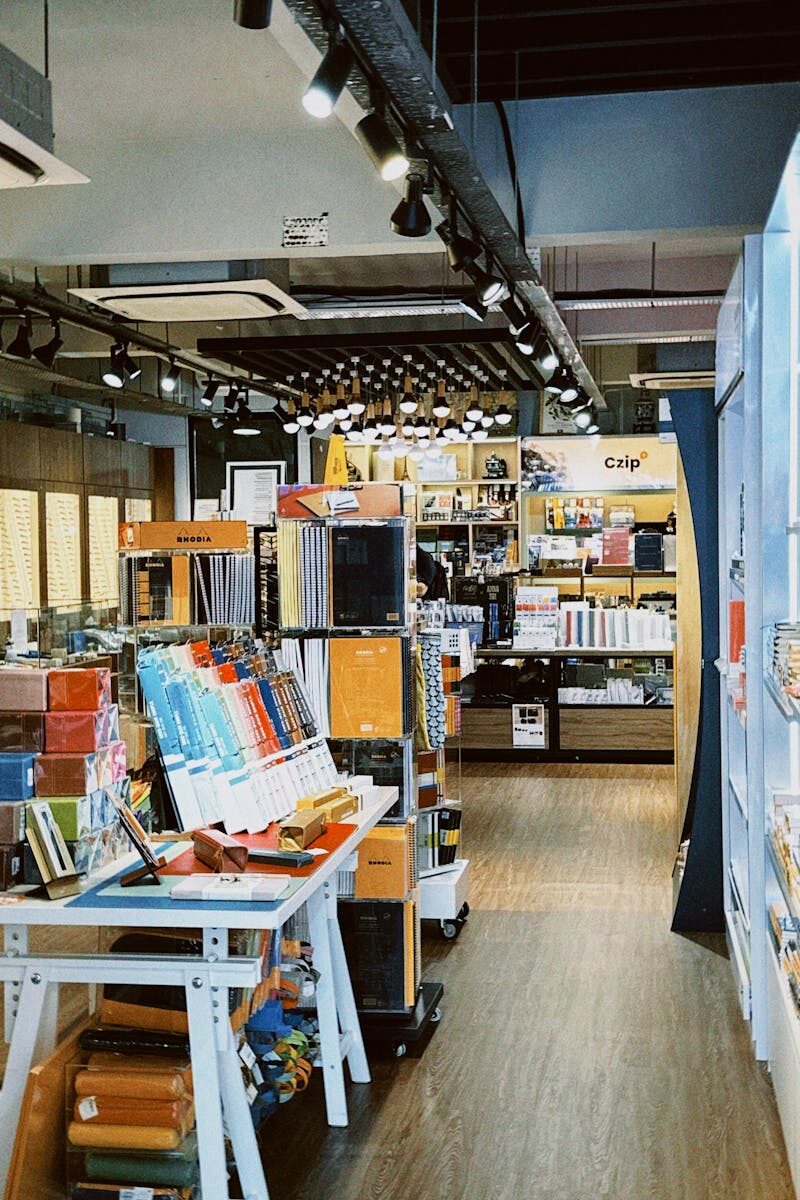
Window and tabletop displays require a different design logic than shelf or counter displays. The viewer is either outside looking in, or standing directly in front of the display at close range. Both demand visual clarity at a glance and branded cohesion across every element. Here is what to understand before you order.
Display types we source
Tabletop display systems — a coordinated set of display elements (risers, stands, trays, sign holders, and branded props) arranged on a table, market stall, or boutique surface to present a brand's full product range. Produced in acrylic, corrugated board, rigid printed board, or a combination, to match the brand's aesthetic.
Corrugated tabletop display units — a smaller-scale version of a floor display, designed to sit on a table or counter surface. Tiered, header-panel, or flat-tray formats. Fully printed and flat-packed for easy transport.
Acrylic tabletop risers and stands — the core building block of a market stall or boutique table display (see also: Acrylic Display Risers & Stands). When organized as a coordinated tabletop system, they create a unified, architectural display with strong visual hierarchy.
Printed rigid backdrops and display boards — a flat or slightly angled rigid printed panel (foamboard, corrugated, or mounted print) placed at the back of a display table or window setting to provide brand context, lifestyle imagery, or a product menu. Available with an easel back or freestanding base.
Window vinyl decals and clings — applied directly to the inside face of a glass window. Can display brand logo, a promotional message, a seasonal design, or product imagery. Removable and replaceable seasonally.
Foam-mounted display prints — high-resolution brand or product images printed and mounted on a rigid foamboard backing. Lightweight, frameless, and easily positioned on stands, shelves, or window ledges.
Popup display frames (tabletop) — a small-scale retractable or folding frame system with a custom-printed fabric or paper panel. Used at trade shows, markets, and events as a branded backdrop. Packs flat for transport.
Custom branded props and risers — non-standard display objects (geometric shapes, branded crates, styled boxes) produced in corrugated, acrylic, or painted board to match a specific visual aesthetic. Used by brands with a strong point-of-view on their display identity.
Easel-back display cards and printed stands — printed rigid cards with a fold-out easel stand on the back, used to present product information, a seasonal message, or promotional pricing on a table or shelf. An accessible, low-MOQ product for brands updating display messaging frequently.
Design principles for window and tabletop displays
Window and tabletop contexts reward a specific approach to display design:
Height variation — a display that sits flat loses visual interest immediately. Use risers, stands, and stacked elements at three or more heights to create a layered, architectural look.
Brand cohesion — every element (color, material finish, print style) should feel like it belongs to the same family. Mismatched materials signal an unplanned display.
Negative space — a display does not need to be packed with product. Leaving deliberate empty space around hero products draws attention to them more effectively than filling every surface.
A focal point — the eye needs somewhere to land first. A taller centerpiece element, a branded sign, or a single hero product on an elevated stand creates a visual anchor.
Seasonal replaceability — the structural elements (risers, frames, trays) should be durable and neutral enough to be reused across seasonal refreshes, with seasonal elements (backdrop prints, promotional cards, window decals) being the only elements that change.
Materials by context
For brands selling at markets, events, pop-ups, or through boutique wholesale, the display table is the brand. Before a customer reads your label, checks your price, or asks about your product, they have already formed an impression based on how the table looks. A styled, branded, cohesive display communicates quality, intentionality, and professionalism — all before a single word of conversation.
For brands placing product in boutique windows, the visual display is a direct driver of foot traffic. A window that is clearly branded, seasonally current, and visually interesting gives passersby a reason to stop, look, and walk in.
Shape Bend Form is a sourcing service built specifically for small and micro retail brands in the US, Canada, and Mexico. We work with vetted manufacturers in India and China to produce custom retail packaging, display stands, and brand extras — then ship everything direct to you via air freight. Think of us as your dedicated packaging sourcing team: we find the right manufacturer, negotiate your price, manage production, and get your order to your door.
No. We are sourcing specialists, not a factory. This is actually an advantage for you — because we work with multiple manufacturers across India and China, we can match your specific project to the supplier best suited to your materials, format, quantities, and timeline. You get access to a wider range of capabilities than any single factory could offer.
We currently serve retail brands in the United States, Canada, and Mexico.
We work with micro and small retail brands across a wide range of product categories, including skincare and beauty, jewelry and accessories, specialty food and artisan beverages, candles and home fragrance, apparel and lifestyle, and subscription box businesses. If you sell a physical product and care about how it's presented, we can likely help you.
Sourcing overseas manufacturers on your own requires significant time, supplier vetting experience, language navigation, and quality oversight that most small brand founders simply don't have the bandwidth for. We already have established relationships with reliable factories, know how to read and negotiate quotes, and manage the production process so you don't have to. You focus on your brand — we handle the sourcing.